Showing posts with label guide. Show all posts

Tuesday, 25 July 2017

Paperbacks on Amazon

The final editions and revisions are done for the 2 novels.  They available with free kindle downloads from Amazon.co.uk when you order the paperback.
From 26-30 July 2017 the Amazon Kindle versions are all free!

Any Means to an End
By Andrew R Welsh
Diaries are uncovered detailing the life and times of Richard Buchanan. He is an English Navy officer leading a gang of sailors through the blue water Caribbean to the grey of the Baltic. They wreak havoc on enemy shipping, pirates and those who act outside the law. Donating their prizes to the Crown they are welcomed back to the fold and entrusted with more missions. Finding intrigue, murder and romance along the way, will Richard ever settle down in his beloved South Shields?
ISBN: 9781781760048
Total Pages: 248
Published: 10 February 2012


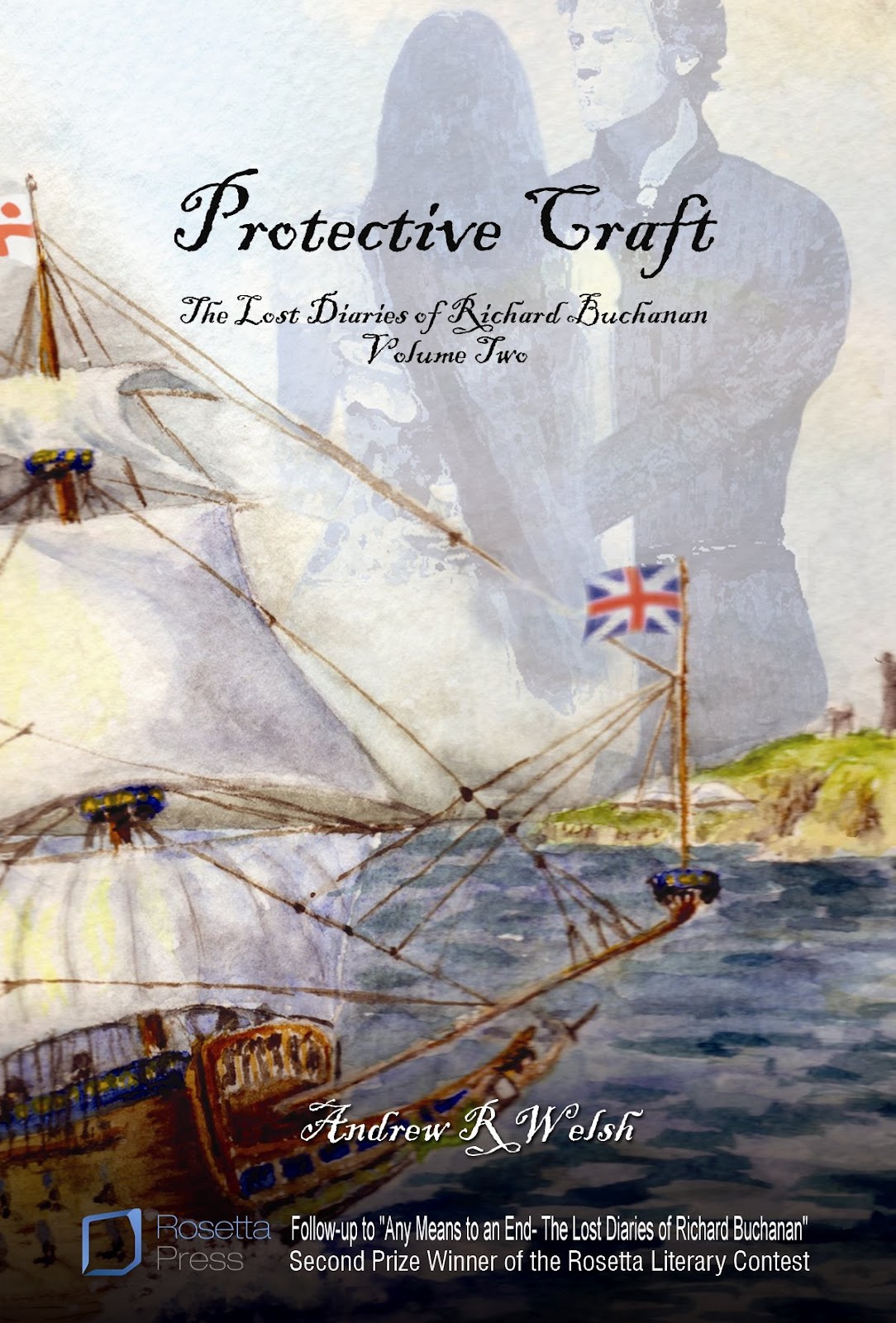
Protective Craft
By Andrew R Welsh
The Commodore's adventure continues, in this, the follow-up to "Any Means to an End". He must return to the New World, where surprises abound, and loyalties are stretched to breaking, while an abandoned love resurfaces to change everything...
ISBN: 9781781766576
Total Pages: 169
Published: 24 July 2013

Teaching Overseas - A Short Guide
By Andrew R Welsh
The e-book "Teaching Overseas - A Short Guide" is now also a paperback guide to teaching overseas, with the second part being the description of the first 2 years of my time overseas in Philippines and Malaysia.  This was due to a request from a colleague now in Zambia who, after reading the electronic version of "Teaching Overseas - A Short Guide", thought a hard copy would be useful.  
"Just about everything you need to work through if you're considering applying for an overseas post. This is not just about the dream, but also what can go wrong and how to avoid pitfalls. It should enable someone to decide whether the overseas life is for them. The second part of the book contains a description of the first two years of my overseas experience in the Philippines and Malaysia. It has to be an essential for anyone thinking about or currently teaching overseas. Written by a teacher and educational consultant with 18 years experience overseas in Europe, Africa and across Asia, there's not much that isn't covered. This book could save you heartache and money."
ISBN: 9781782997559
Now available through Amazon.com


Fishing Trip - Glossy Coffee Table Book


I'd been wondering how to made a tangible version of the book currently available as e-book on Kindle available for its original purpose as a gift to my daughter.  I didn't use FeedARead.com as the internal images with that publisher are black and white/greyscale.  That was why Kindle was chosen as medium to show the trout in full colour.  However, the images had to be reduced in resolution for the book to be uploaded.

Visiting Weardale Studios (http://www.weardalestudios.com), at the Dales Centre in Stanhope, I mentioned my dilemma to the photographer (Liz Laidler) while waiting for my ID pictures for Kuwait to be printed.  She suggested http://www.photobox.co.uk and this morning I logged on, chose the A4 Portrait format and started adding the text and images one page at a time.  The formats are designed really to people to create albums of images from digital photography/scans, but text is allowed so I was able to have text pages and image pages along with mixed media pages of text and image.

It is not cheap, but then colour printing never is.   It is £65 (GBP) with 46 pages including the options  - HQ premium paper or glossy paper, matt laminated cover finish, box sleeve cover, but if you order another copy there's a discount.  Its on Photobox at http://www.photobox.co.uk/creation/2015752398

I do get messages from Photobox.co.uk suggesting the facility for the photobook was going to go in August 2016, but all seems to be well so far.

Consequently, two copies were ordered; Holly got her personal copy, as did the illustrator.  That was two Christmas presents sorted!

Incidentally, a resent search of the internet came up with this  at Angler'sNet.co.uk the kindle version got to #9 in the Fly Fishing top 10 on Amazon.co.uk which is very pleasing to see.

Fishing Trip - An Introduction to Fly Fishing and Trout


I first went fishing (as my daughter Holly has done), with a jar and a small net attached to the end of a bamboo pole for sticklebacks and other fry.

It wasn’t until I was about nine years old that I actually got a small fishing rod with a fixed spool reel for casting the baited hook a little bit further away.  At about the same time my father got a fly rod from “Durham Anglers” when it was situated on Claypath in the city.  The proprietor ran casting classes for those who wanted them to go with their new fly rod, so I went along with my Dad and was shown the ropes.  At home I decided to practise casting on the large Rectory lawns aiming for targets with a feather ties to the end of the line.

I did get quite good at casting, but when it was time to go to the river, I ended up back with my five feet long rod and fixed spool reel.  I didn’t get to fish with the fly rod.  My other friends seem to enjoy ledgering, spinning and floating fishing for coarse fish, and every now and then a trout would take the bait.  I carried on an amassed a selection of tackle and rods and represented Newcastle Polytechnic in the National Colleges match fishing competition on the Grand Union Canal near Warwick University in 1984.  I did manage to borrow the rod on a few occasions to fly-fish in the River Wear at “The Sands” in Durham City, but always ended up catching chub, dace and roach; never a trout on the fly.

It was only while working at the Royal Infirmary in Sunderland that I inherited some fly making equipment from my grandfather that I started making flies for Mr. R Warne (the Senior Chief at the time in the Histopathology Department) and getting my father’s old fly rod, that I was able to go with my father and his new rod to practice fly-fishing for trout  in actuality at Witton Park.  It was their that I caught my first trout on an artificial fly.  It was exciting to think that a fish would take a piece of material wrapped around a hook that looked nothing like anything in its natural diet.

It wasn’t just the fish that was hooked that day but me, although it wasn’t until I met Bob Smith from Morpeth (while teaching in Ashington), that I really started to become obsessed as well as proficient at catching trout and making flies.  I had previously been thinking always about the cast and hadn’t actually understood what the fishing books had been describing for the process of retrieval of the line and hooking the fish.

I picked up the tips quickly and since then have generally managed to return home with a couple of trout from every trip.  The average is that I never return empty handed, and one July day in 2005, even managed to get a TroutMasters award for a 14lb 6oz Rainbow Trout at Jubilee Lakes in County Durham.

I have to say also, that I am not actually interested in pulling out every fish in the river or lake.  I like to catch  a fish that I will eat with my family.  I don’t wish to have a fish suffer the trauma of being caught and released either.  When I have what I need, I pack up and go home.  I like to tailor my flies to hooks that will fulfil this purpose.  When working in Qatar, I would fly fish in the shallow waters around the pier in the bay at Simaisima.  The fishing was good for four years, until net fishermen removed all the fish in about one month during the fifth year.  So much for my Friday morning relaxation!

Fly fishing is a skill; an art if you like.  Each cast I like to be as smooth a roll as possible.  I get embarrassed when the fly makes a splash on the water. In Qatar I remember being filmed casting by people from the pier.  I must have been an unusual sight, waist deep and casting across the waves in the baking sun.

Regretfully, I didn’t do my research into Mongolia particularly well before arriving for a three month teaching stint, though in my defence, I only had four days to get ready!  I left my rod at home and only last week discovered that the country has the world’s largest trout species about 700km from where I was in Ulaanbaatar.  However, given that the Taimen can be up to two metres long and 90kg, my light tackle might have been hard pushed to cope with something more deserving of heavy salmon equipment.

Many fisheries are importing trout species from around the globe, so it may be useful to anglers young and experienced, to see the many varied forms and colours of fish we call “trout” included in the guide.

The e-book got into amazon.co.uk's top ten for fly fishing books according to Angler's Net website in April 2013.

Now at the end of July 2014, the action in the book is about to become reality as Holly and I head to Chatton Trout Fishery  in Northumberland to meet up with Bob Smith who has indicated he will be able to assist in the fly fishing tuition of Holly. I have no doubt that she will do well with his expert tutelage. 

Teaching Overseas - Synopsis and Excerpt


 Just about everything you need to work through if you're considering applying for an overseas post.  This is not a pamphlet from an agency trying to sell you a dream with nice images, but tells you of what can go wrong and how to get out of a situation.  It should enable someone to decide whether the overseas life is for them.
It has to be an essential for anyone thinking about or currently teaching overseas.  Written by a teacher and educational consultant with 18 years experience overseas in Europe, Africa and across Asia, there's not much that isn't covered.  This book could save you heartache and money.

Excerpt

Why move?

Ask yourself these questions:
1)       Can I secure a post in my home country?
2)      Is that post a promotion or a sideways move?
3)      Have I completed my initial probationary period successfully?
4)      Do I see others moving to promoted positions or having to leave the teaching profession to work?
5)      Do you really want to teach as a career after completing your probation?
6)      Do you enjoy what you do?
7)      Do you feel that you can save enough money each month to take care of savings and getting a mortgage?
8)      Do you like your holidays and conditions of service?

These questions are designed to start off you critical analysis of your home country position.  If you can see that you are heading up the promotional ladder, you may need to start looking at a different set of questions.  These should re-examine your reasons for entering the teaching profession.
Also you need to be aware that your promotion (if you have had them) could have been to get you out of the classroom and doing damage there.  Be honest with yourself.  Are you really a teacher or a manager?  If you are a manager then should you really be telling good practitioners how they should be teaching?  Never forget that many classroom teachers elect to stay at that level because they love their job and actually are good at it.  Some school managers have kept them in the classroom because they don’t want to lose the good practice they have.

When you have looked at your options about what to do next, stop.

 THINK!

“Will this move from my current post impact on future retirement plans, pensions, health care and other benefits you may have in my home country?”
For example, will you be viewed as a “wanderer” who will not be happy in a permanent post when you have returned from this purportedly exciting world of working abroad?

Look at staff in your school.  Are they all young, newly qualified or within a few years of qualifying?  When they leave do they get teaching posts in your home country?

Can you see a gradually diminishing in the average age of the teaching staff in schools?
If you can spot the patterns, you will be starting to realise that the government’s (in the UK) claim of there being a shortage of teachers is a fallacy.
There are, in the UK apparently, more teachers not working in schools than there are teachers working in schools.

Think about that, and then think about why that might be.  School budgets perhaps?  Headmasters and Principals who are possibly on bonus systems for saving money?  Possibly more concerned with balancing the books than providing their students with experienced teachers (those who are on the top of the pay scale).  Have any teachers you know been “moved on” or “edged out” of post once they started to get too expensive to keep?

Unfortunately, it is far too easy for an unscrupulous school leader to create a situation that could cast aspersions on a teacher’s behaviour or character that are difficult to walk away from without some of the mud that has been slung, sticking.

So, before you start applying for overseas posts, think very carefully about your needs in the present and in the future.  Some people do find work again in the UK when they return, but many don’t.  When they do find work again, it probably won’t be at the same level, but lower than when they left, and they may have to accept lower salary.  Some schools do not count service overseas towards pay scale increments.
 
Looking for the Post

The internet is a wonderful thing isn’t it?
There are many sources of information about where to find posts overseas online.  Too many probably, and several advertising the same role perhaps?
There are recruiters out there who wish you to sign up with them first, hand over your money and then they will try to find you a job.  There are others who will take out adverts on behalf of the school and get paid their money by the school or organisation when they have supplied a teacher who successfully completes the probation period.
Which of those types of recruiter wants to make sure they supply a teacher who will fit into the school and stay there?  Redundant question, I know, with the answer being the one who has to wait for their money.  They also have your best interest at heart too, because they shouldn’t be aiming to try to fit you (our square peg) into a school (the round hole) that wouldn’t suit you.
How do you spot the difference between these recruiters?
The recruiters who are in the game for the long haul generally will advertise on behalf of the school in the Times Educational Supplement online and paper version.  These days the paper version of the TES will carry less overseas adverts and most are in the international jobs section online. There are other newspapers worldwide that carry teaching posts along with organisations such as VSO, Aus Aid etc that have volunteer posts on their websites.
Some schools will not use recruitment specialists and take out their own adverts and interview using their own senior management people.
I did mention the TES for a reason, however.  You must start browsing the overseas posts well in advance of when you want to apply for a post.
The first reason for browsing is to note down those schools that are advertising all the time.  There are schools (especially from Spain), who are running adverts in the TES almost every week.  Clearly, you should avoid such places as people are not staying there very long!
There are others, who will always place an advert in the TES every November/December that covers all subjects and positions in the school.
In those cases they are “fishing” for applications.  It’s a bit naughty really.  They will have asked their current staff on one year contracts whether or not they wish to have they contracts extended.  While the replies are being processed, the school is receiving resumes and curriculum vitae from those responding the advert.
If someone applies for a position who seems more well qualified (on paper at least) than the current post holder, then the incumbent teacher may well have a letter saying that the school has decided not to renew their contract for the following year.
The school is also at the same time collecting a database of many qualified teachers who, if needed, could be contacted at short notice and drafted in to replace current staff if needed.
So, you have realised now that many of the better overseas school put out their adverts in the October or November proceeding the September for which they want to recruit.  The question now is “Which part of the world do I want to target?”
This is very much where you actually get some control in the process, though it depends on your reasons for the overseas move.
These questions should help focus your decision:
1)      Do you want a post with:
a)      Annual return flights?
b)      Initial and final resettlement baggage allowance (minimum 500 USD)?
c)      Accommodation provided?
d)     Utilities paid for by school/company?
e)      Tax free salary (see explanation after list)?
f)       Private medical insurance?
g)      Employer organises in country work visas and residency?
2)       Are your qualifications portable to particular countries?
3)      Do you have medical problem that would be exacerbated by the climate or would you be able to get the medication you need in that country?
4)      Are you after sightseeing or further travel opportunities that would be benefited by working close to an international travel hub?
5)      Are you able to get to the country’s embassy/consulate easily for visa processing.
6)      Are you HIV positive?  If you know the answer to this is in the affirmative, then (if an EU citizen) you should give up the process of application outside the EU as every non-EU country will test you. On finding a positive blood test they will put you on the next plane home (probably without counselling).
7)      There are weather and geological factors you should note.  Are you of a nervous disposition?  Frequent earth tremors may freak you out and strong tremors could have you on the next plane home (if the airport is still working).  Parts of the world do suffer from extreme weather.  In the Philippines the school had three warning sirens – fire, earthquake and typhoon.  If you thought hurricanes in the Caribbean were bad, try a typhoon for size!  Cyclones wreak havoc in Western Oceania.  The opposite is also a problem, such as drought in Africa.  I find volcanoes interesting, but don’t want to live next to one.
8)      Your personal hobbies and interests.  You may be wishing to learn or continue with scuba diving or some other activity out of school hours.  Look at what the different countries have to offer in those areas.  I am an angler so I like to see the fishing opportunities in a country.  Mongolia, for example has the world’s largest trout species, the Taimen, with specimens up to two metres long and 100kg in some rivers.

The questions given in part “1” above should be your starting point in the search for a school and these can all be found in some schools (the better ones). 
There is a catch with the words “tax-free”.  For some schools it means that you get the equivalent UK salary but don’t have any tax or other contributions deducted.  This is fine, just remember that you may wish to top-up you NI contributions on a regular basis should you like a state pension or at least some social security benefits should you return and need them.  Pensions may need topping up too, just remember that the employer won’t be adding their contributions as in the UK.  You will have to top up the full amount should you wish too.
Other schools will pay you a salary which is equivalent to the UK salary that has had the tax deducted.  You just won’t be paying tax on it.
I like to look at a country’s cost of living (which a good school should offer links to on their website for prospective staff) and calculate how much I can save when working there, compared to other job offers and the UK situation.
Schools within Europe will often not offer flights or accommodation.  Ask yourself why not?  Given the age of cheap flights, how much good-will would be achieved by organising the flights for the staff and sourcing accommodation?  Let’s face it.  You are going to give up your life in the UK or elsewhere and move it to a new country.  Sorting out flights, baggage and accommodation should be best accomplished in bulk and by local school staff who speak the local language and have local contacts.
As a UK, Irish, Aussie, Kiwi or US teacher working overseas, you are generally going to be at a school delivering a curriculum in English, even if the students aren’t native speakers.  You are not generally going to have studied the local language for every country you could be heading too.
I have visited twenty six countries in my life to date and have only spoken the local language well in three places outside of the UK – Eire, US and France (and the latter level is not fluent).  When I do try to learn a local language, the only real repetition and learning occurs when using taxis.
Your language skills could send you heading towards a particular country to work.  A great many of the overseas teachers are teaching English, especially with the voluntary organisations.  Even within the overseas schools, often the English departments are large to cope with developing English skills amongst the student body.  Some of the teachers are not necessarily of Qualified Teacher Status, but have qualifications for TOEFL or TOESL and may be in an adult education centre.

Saturday, 18 May 2013

Pleasantly surprised.


When I first wrote the poem "Fishing Trip", it was done while I was working away from home in Abu Dhabi just for something to read to my then 2 year-old daughter.  By the time she had arrived to stay, so many other things happened, I forgot about it and only found it again while writing the second novel "Protective Craft- The Lost Diaries of Richard Buchanan".
By that point, Holly was 4 and I was in Mongolia and had published 3 books on Kindle.  I decided to polish up the poem and add images of trout to make it more interesting for her now she was able to read simple books and was showing an interest in my fishing "exploits", especially the catches of trout.
I needed an illustrator so my mum was again roped in for artist duties.  This had the benefit of "free artwork", but the problem of the paintings only becoming available when she had had the time to complete them.
Effectively, the main text of the book was completed by September 2012, but the illustrations weren't.  While waiting I decided to add the simple casting and fishing instructions too which I could draw on my own.
Eventually, almost a year after since accepting the "commission", the final picture was delivered and the book could be uploaded on to Kindle as "Fishing Trip - An Introduction to Fly Fishing and Trout".
This was not the original hope.  I had hoped that I would be able to find a publisher capable of turning it into a colour plate hardback for children to read, or for others to read to them to get them interested in fishing in general and fly fishing of trout in particular.  The nice thing about Kindle format is that the machine will read the book to the child and Holly has already done this, fascinated by being "in a book" where her father helps her catch a fish.  The really surprising thing about the whole affair is that, after writing it with a target audience of one, copies are being whisked of the electronic shelves at a rapid rate.
Not long now Holly.  I'll be home soon and we'll really catch one together.


Monday, 17 September 2012

My Kindle Books


Kindle eBooks   UK
 Any Means to an End at Amazon.co.uk
Any Means to an End -The Lost Diaries of Richard Buchanan ISBN: 9781781760048
5-Star Review of Any Means to an End
Diaries are uncovered detailing the life and times of Richard Buchanan. He is an English Navy officer leading a gang of sailors through the blue water Caribbean to the grey of the Baltic. They wreak havoc on enemy shipping, pirates and those who act outside the law. Donating their prizes to the Crown they are welcomed back to the fold and entrusted with more missions. Finding intrigue, murder and romance along the way, will Richard ever settle down in his beloved South Shields?


Protective Craft at Amazon Kindle
Protective Craft - The Lost Diaries of Richard Buchanan (Volume 2)
The Commodore's adventure continues, in this, the follow-up to "Any Means to an End".  He must return to the New World, where surprises abound, and loyalties are stretched to breaking, while an abandoned love resurfaces to change everything ....
White Sands, Green Trees is only available at Amazon.co.uk - It is a humorous description of my travels and adventures around the Philippines and Malaysia during 1996-98.


 This has to be an essential for anyone thinking about or currently teaching overseas.  Written by a teacher and educational consultant with 17 years experience overseas in Europe, Africa and across Asia, there's not much that isn't covered.  This book could save you heartache and money."


Literary Contest Prize references 

FrontRowLit Magazine article for Any Means to an End
FrontRowLit Magazine article for White Sands, Green Trees
FrontRowLit Magazine article for Teaching Overseas - A Short Guide